Saturday, July 19, 2014

The Thrawn Trilogy

So I was in the mood for some Sci-Fi, and Robby said that Timothy Zahn's Star Wars books were some of the best out there, so I figured I'd give them a shot. I chose to read Zahn's first series, which is known as The Thrawn Trilogy after the central antagonist. The specific books are Heir to the Empire, Dark Force Rising, and The Last Command. I wasn't disappointed. They were fun to read, and gave me a pleasant glimpse into the wonderfully imaginative world of Star Wars. What's best, these books were written in the early nineties, before George Lucas had come along and ruined everything! I'm pretty sure they were written for eighth graders, but I had fun reading them all the same.

The series takes place five years after the events of Return of the Jedi and shows the fledgling New Republic taking shape and trying to survive. At the same time the Galactic Empire is in decline, until Grand Admiral Thrawn shows up. Thrawn is a really hardcore guy who is equal parts Sherlock Holmes and Robert E. Lee. He's a brilliant military strategist who studies the art of his enemies in an attempt to understand their psychology and thus predict they actions in battle. Even though he's the antagonist I couldn't help but be impressed by Thrawn's abilities. Aside from Thrawn himself there are only a few new characters worth mentioning. With Han Solo now a straight-edged republic citizen we need a new smuggler, so we get Talon Kaarde. He's our classic semi-brilliant smuggler with a heart of gold, and he serves as a nice foil for Thrawn. He's very loyal, very intelligent, and does what he thinks is right. He's on nobody's side but his own, but he's a cool guy and I really liked his character. Then we've got Mara Jade, who I was familiar with before even reading the books. She's a major part of the Star Wars expanded universe, so anyone with serious nerd cred should have at least heard the name. She works for Kaarde, and she has a major beef with Luke Skywalker and wants to kill him. That's all you need to know for now.
The plot of the three books is simple: Save the republic, stop Thrawn, stay alive. I really enjoyed the formula for the first two books, but by the third it was getting a bit old. I still liked the third book, but I thought it felt a bit labored in comparison to the others. One other complaint I had was that these books leaned too heavily on the films for source material. It seems that every character had to say one of their famous lines every now and then, particularly Han Solo. I got really tired of Zahn aping material from the films in order to breed familiarity. He's a pretty capable writer and obviously has a good grasp of the characters, so I think it's a tragic demonstration of a lack of self-confidence that he felt the need to borrow so much material. 
Is this series great literature? No. But it certainly is enjoyable. If you're a fan of Star Wars and need to get a fix while waiting for the highly anticipated J.J. Abrams/Disney films to come along give these a read. Each book is fairly short, and they progress rapidly. Plus there's plenty of satisfying Jedi stuff and cool lightsaber action. 

Score:7.5/10

Read this book if: You're a Star Wars fan who needs a break from serious literature.

Don't read this book if: You find Star Wars juvenile, or consider yourself above reading books written for teenagers (which is silly, since all the best books are written for teenagers). Also if you're so doggedly committed to the Star Wars film canon that you cannot permit any reinterpretations of the characters.

Killing Floor


So remember that fairly terrible Tom Cruise move that came out a while ago, Jack Reacher? Yeah...so, this is the first book in the series that inspired that lousy movie! The truth is that I actually really liked that movie. I was particularly interested in the character of Jack Reacher, who is a recently retired military policeman who specialized in homicide investigations for the army. He's a dogged investigator with his own sense of justice and morality, and now that he's out of the army he's traveling around 'Murica with nothing. No phone, no backpack, no driver's license. He just gets money from Western Union every now and then and wears a pair of clothes until they're dirty then buys another pair at a thrift store. Reacher's liberated lifestyle is fascinating, and I enjoyed briefly taking part in this fantasy of freedom.

The plot and characters of this book are completely irrelevant. Basically Reacher shows up in a small town completely by chance, and then gets drawn into a murder investigation when he (spoiler alert) gets accused of/framed for murder. He then proceeds to kick butt, take names, and try to clear himself so he can go on with his merry life. Naturally the plot thickens several times, there are twists and turns, and that's all I'm going to say. 

The characters are pretty flat and unsurprising. The sinister people stay sinister, the cool people stay cool, and nobody gets developed very well except Jack himself and possibly some guy at a barbershop. 

Now if the plot and characters are predictable, the writing itself is just downright awful. This is honestly one of the most poorly written books I've ever read. The language was clunky and ugly, the descriptions were vague and inconsistent, and the tone was repetitive and dull. My favorite line from the whole book demonstrate the echelon of writing in which this book falls. Jack is on a stakeout in a borrowed Bentley (of course), and he realizes his car stands out a bit. He muses to himself "It was about as distinctive as the most distinctive thing you could ever think of." Wow! That's quality writing if I've ever seen it! What a great simile! I love it when people compare an abstract concept with itself in a bid for clarity! Seriously, this writing is bad. Consider yourself warned.

But you know what? None of that stuff matters. I didn't care that the writing sucked, or that the plot was predictable, or that the characters were flat. This is just a fun book to read. It's a page turner in every sense of the word. It's the book equivalent of a J.J. Abrams movie: at it's core it really sucks, but it's fun enough to distract you from the fact for a while. I read this book quickly and frankly loved it the whole way through. It's flaws made me laugh, while it's story kept me entertained. Ultimately that's what books like this should do, so I deem it a success and give it my seal of approval. If you liked the movie or find the concept intriguing go ahead and give this book a shot. There're about a billion Jack Reacher books by Lee Child, but I hear the first one is the best.

Score: 7/10

Read this book if: You want to shut off your brain and have some fun. It's like watching a movie, but you'll look sophisticated while doing it!

Don't read this book if: You have even the slightest compunction about reading a book that is, in every measurable way, terrible and stupid.

Anne of Green Gables

There are books that have such a prominent place in public perception that it's almost impossible to approach them without preconceptions. Anne of Green Gables by L.M. Montgomery is one such book. I grew up watching the movie as my mom would iron clothes, hearing references in movies like You've Got Mail, and generally thinking it was a book for girls. I was wrong. It may be a book about a girl, but this is definitely a book for everyone.

Anne of Green Gables tells the story of Anne Shirley, an orphan girl living in Nova Scotia who is accidentally adopted by the stern old maid Marilla Cuthbert and her shy brother Matthew. The events of the story are largely simple ones--going  to a concert, attending school, having tea with the pastor's wife--yet these events are lent a sense of significance through the gentle evolution of the characters, as well as through Anne's highly evolved taste for dramatics. Every character in this book is a delight. Montgomery presents the reader with characters who seem a bit extreme initially, but eventually soften and take the shape realistic lovable people. Seeing this change in the characters is a real joy, and it's reminiscent of the way we learn to love people as we get to know them better.

Of all the characters to watch take shape, Anne is the most interesting and entertaining. She's a highly imaginative, highly literate girl with an infinite capacity for drama and fantasy. Often these traits get her into trouble, but mostly they just make everyone around her smile. Anne is like an irrepressible ray of sunshine. Her elastic personality is extremely entertaining, and I loved watching her moods swing rapidly from pole to pole at the slightest provocation. Her language is hilarious, and her relationship with books and writing is fascinating.

I finished reading this book several months ago, so I'm afraid I'm a bit short on the details presently. However, I can remember my general impression from the book: delight. I absolutely loved reading Anne of Green Gables. I found the characters to be wonderful, the writing pleasant, and the messages about family, friendship, imagination, and learning to be profound and moving. I smiled, I almost cried, and I laughed frequently. This book may not be the most significant piece of literature ever written, but it's certainly a fine read. There's not a thing I'd change about it. If you've never read it, I urge you to do so as soon as possible!

Score: 10/10 Perfect!!!

Read this book if: You want to be absolutely delighted from start to finish with the hijinks of one of the most interesting young girls to ever grace a page, or if you want a moving story about the power of love and the nature of family.

Don't read this book if: You want to stay miserable forever and lead a life without joy!

Tuesday, May 20, 2014

Howl's Moving Castle

I like Anime. I'm particularly a fan of the works of Miyazaki (as I think most Americans who claim in interest in Anime are). The first Miyazaki film I ever saw was Howl's Moving Castle, and it wasn't until a couple months ago that I learned it was based on a book. Eventually I found a copy and decided to give it a read, and on the whole I found it to be pretty good. The plot is very close to the film at first, then it departs in a lot of crucial ways. It's close enough to still be enjoyable, and different enough to keep you guessing if you've seen the movie.
The  book, like the movie, is about a girl named Sophie who has a curse placed on her that turns her into an old woman. She then falls into the company of the wizard Howl, and his personal fire demon Calcifer. They have various adventures together battling witches and breaking spells, and it's all very mysterious and magical and exciting. I won't say  much more, because I don't want to venture into spoiler territory, and honestly there's just not much else to say.
The characters were pretty good. I really liked Calcifer, but I found both Howl and Sophie to be kind of annoying a lot of the time. I've heard a lot of people saying that by the time they finished the book they were absolutely in love with Howl, but I thought he was still pretty weird by the end. I guess that's just personal taste. The plot itself seemed to wander a bit before finding itself, and I felt the resolution happened to quickly and wasn't as satisfying as I would have liked.
Overall this book is decent, but by no means life-altering. It's a quick, fun read, and a worthy use of your time if you like fantasy novels, or if you're just a fan of the film and want to explore the source material. For anyone else this is a book that you can either take or leave, and it probably won't affect your life too much either way.
Score:7/10
Read this book if: You like the film, like fantasy novels, or are just looking for a fun and quick distraction.
Don't read this book if: You are on the prowl for some deep lit to brood over for a while.

P.S. I think the film is quite a bit better than the book.

One Hundred Years of Solitude

I'm really pleased I read this book before Gabriel Garcia Marquez passed away. He was a Nobel Prize-winning author, and most consider this work to be his finest. Marquez was a Colombian who wrote in an interesting genre known as magical realism, in which everyday events are interspersed with the wondrous and strange, yet it all is treated as perfectly normal. This blurry line between fantasy and reality lends a dreamlike quality to magical realism, and allows authors to explore diverse themes without being bound down by traditional literary conventions.
One Hundred Years of Solitude recounts the history of the founding, rise, and fall of a small town called Macondo, as seen through the eyes of the Buendia family. The book spans a hundred years and five generations, and within its pages Marquez has captured every facet of human life. There is  birth, death, joy, sorrow, victory, defeat, and always the persistent equalizing force of time. I was hugely impressed by the breadth of the novel, but also by its depth. Although Marquez covers a lot of ground, there are still characters who are well-developed and human, despite being fantastic and exaggerated at the same time.
All in all I found I enjoyed this book from a literary perspective, though I would never call it a page-turner. It was a bit tough to get through, but it was a rewarding read. I believe that with great literature you can feel some part of your soul being enlarged as you read. This is one of those books. I didn't always understand it, and I still have many questions about it, but I can feel  its weight and merit within me even if I didn't get everything I should have out of the book. This is an amazing literary achievement, and if you're in the mood for something that somehow manages to be both light and heavy at the same time, you'll probably find One Hundred Years of Solitude to be a fulfilling read.

Score:9/10
Read this book if: You are a true lover of great literature and are willing to slog through a few boring parts in order to feel like a deeper and more interesting person.
Don't read this book if: You have difficulty suspending disbelief when reading, or you prefer a book with a few strong central characters and a powerful plot that drives the story. The breadth of this book requires many plots and an enormous (and confusing) cast of characters.

Tuesday, May 6, 2014

Peril at End House

Ever so often I just get in the mood to read a good mystery. The only problem is that in my mind mystery books are a lot more...mysterious...than they are in real life. This probably comes from my misspent youth as a mystery video game lover. Still, I managed to power through this little Agatha Christie novel without too much boredom. It's about some woman who has had several attempts on her life, so Hercule Poirot wades into battle in order to keep her alive. It's your standard mystery story: everyone is lying, everyone is suspicious, and in the end it was...well, I won't spoil it for you. Like all mysteries, though, it tries to keep you guessing. Honestly, I kind of had it figured out (in a rough way at least, nothing too specific) by about a third of the way in. The problem with mystery books is that you can't ask questions. It's an investigation on rails, which is frustrating since you can't "investigate" they way you'd like. When I got to the end of the book I couldn't help thinking "I could have solved that way faster." So it was okay. Not great, but not bad. If you want to read a mystery book you could certainly do worse. Still, I think you'd be just as well served by watching the BBC version of the story starring David Suchet. I thought it was just as good as the book, but took a lot less time. Sooner or later I'll just have to face the music and accept that even the best mystery novel pales in comparison with a good mystery game, such as the Tex Murphy adventures. Hey, what a coincidence! Tesla Effect comes out tomorrow! Try it if you want the mystery experience with a bit more control!
Unfortunately no mystery novel
can compete with this!

Score:7/10
Read this book if: You like Agatha Christie and the predictably unpredictable twist endings common to the style.
Don't read this book if: You can play a Tex Murphy game instead.

The League of Extraordinary Gentlemen

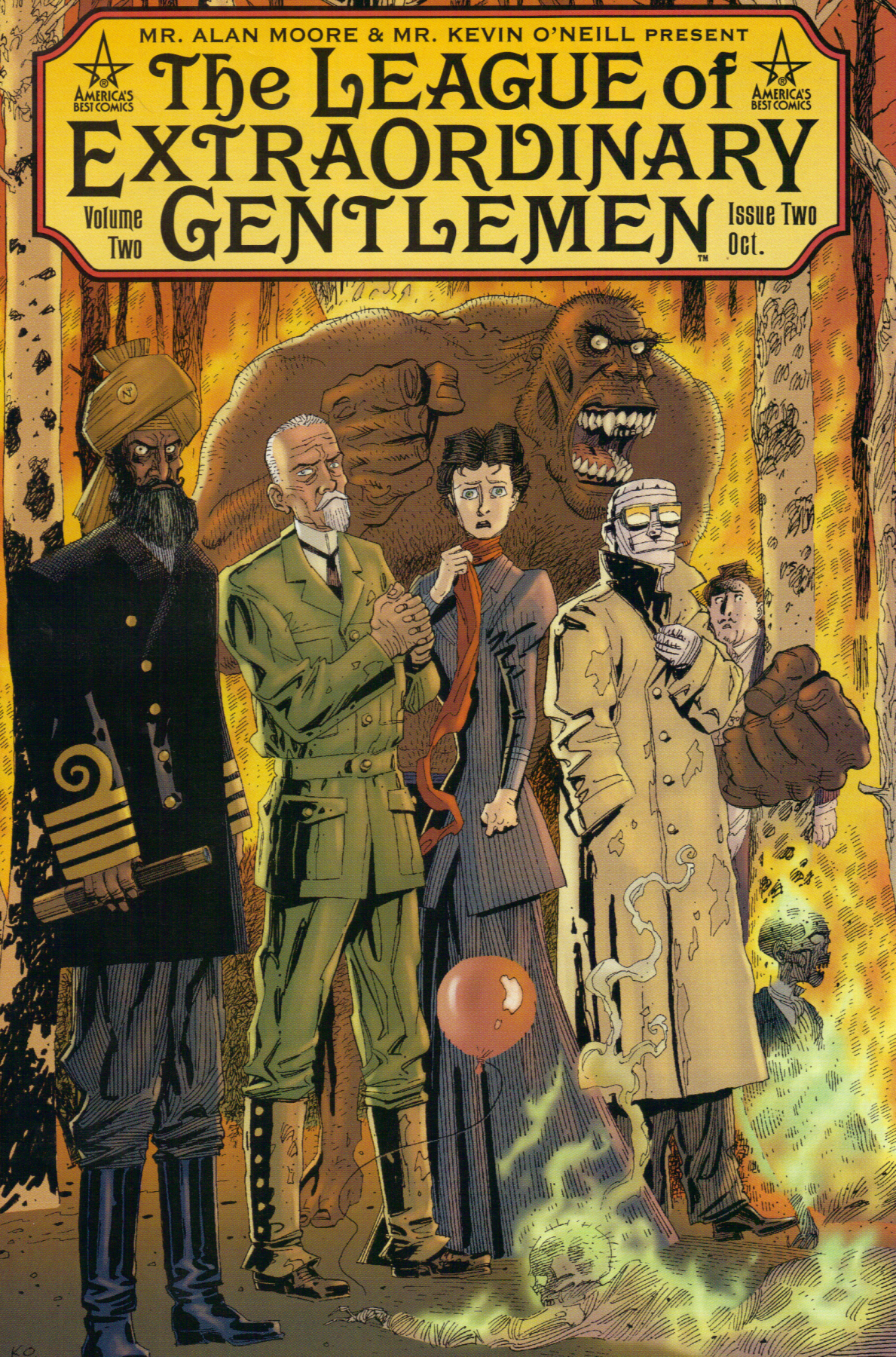
Here's a nice little nibble of a review for you. About three months back I read The League of Extraordinary Gentleman by Alan Moore. It's a fun graphic novel, but not as good as The Dark Knight Returns or Watchmen. The art was excellent, the story was sufficiently compelling, and the writing was fun. It just didn't grab me at any deep level. It was entertainment only, which is sad, because it was so beautifully drawn. Here's the real crux of the book: I've already forgotten most of the plot. Still, it was good, and if you're a fan of Alan Moore's other work you'll probably enjoy it.

Score:8/10
Read this book if: You want to look at pretty pictures while being moderately entertained.
Don't read this book if: Compelling artwork isn't enough to keep you hooked.

Legend

In my ongoing quest to get caught up by blogging about all the books I've read lately, I give you the following short and poorly written review of Legend. (I wrote much of the following review on my phone during a particularly dull Family Home Evening).

I love dystopian fiction! Anthem, The Giver, 1984, Fahrenheit 451...these books capture my imagination and make me think in ways no other genre quite can. The world of modern Young Adult dystopian fiction, however, can be a bit of a mixed bag. I read and enjoyed Hunger Games, but didn't find it to be as deep or engaging as the greats, and I had major problems with Divergent. So when a friend of mine recommended yet another YA dystopian series I approached it with a sizable dose of skepticism. Fortunately for me my skepticism was unfounded. Legend is one of the better works of YA dystopian fiction that I've read in recent years. It's just as good as Hunger Games, and in some ways is even better because it benefits from a more original premise and better writing.

Legend is about some kid, your typical teenage prodigy who is somehow special for reasons that are unclear but will certainly be extremely significant by the third book. Anyway, he ends up joining forces with his former enemy in order to fight against the evil government that is doing all the bad things typical of a dystopian society. The paragraph above this one I wrote a couple months back, and I have to say that the book hasn't aged very well in my memory. I really liked it while I was reading it, and thought it was above average YA dystopian lit. Now I think it is just average YA dystopian lit. The characters are kind of canned, the plot is pretty predictable, and the world isn't terribly imaginitive. Now I will give Marie Lu some credit here. She managed to create a dystopian world that I can actually believe. I found Hunger Games to be really far fetched. In Legend the dystopian world is accomplished through simple economic means. Basically they have a poor class that they oppress by not giving them access to good education and jobs. This is done by means of a standardized test which, SURPRISE, is rigged. That's not far from the world we actually live in, so I can appreciate her attempt at verisimilitude. But the plot and characters are pretty stale, and therefore keep the world from becoming a place of much interest. Also, I'm surprised that I thought this book was more well-written than Hunger Games. Heck, I don't think it's even as well written as Divergent, which I really disliked. Well, it might be as good as Divergent, but HG is better written, even if Katniss is obnoxious.

Overall this was a decent read. I enjoyed it while I was actually reading it, but looking back I realize it was fairly mediocre. Still, sometimes mediocre is a good thing. If you're just looking for an enjoyable read that goes pretty quickly I think you might find this to your liking.

Score:7/10 (Originally a 6, but I realized that was too harsh considering I did genuinely enjoy the book while reading it, even if its flaws are more apparent when seen through the lens of hindsight).
Read this book if: You don't want to think to hard in order to be entertained while reading.
Don't read this book if: You're on a quest for literature that will be more that just a quick thrill and will instead actually teach you something about life and the human condition and all that stuff.

Casino Royale

Sometimes I forget that the only reason I'm writing this blog is to keep track of the books I've read as a sort of personal record of my life of reading. As a few more people have started reading this blog I've developed a degree of pressure-induced writer's block, fearing that my little reviews aren't "good enough" for public consumption. Well, I've decided that that's not my problem! I'm just gonna write little reviews that are rambling and make no sense, and if anyone else wants to read them that's fine by me. And with that said, onto Casino Royale!

Right after I read this book I wrote up the following just to remind myself how I felt about it: "I loved it. It was exciting and sexy and alluring. Basically it was everything James Bond is, but before Bond became burdened by the weight of being a pop culture icon. It was raw and rich, and fantastic. Great action, interesting characters, cool cars, lots of baccarat. A delight to read." I still stand by all those things, which I will elaborate on below.

So Casino Royale is the first James Bond book. It was written by Ian Fleming, and it introduced the world to the suave super-spy that we all know and love. And ya know what? It's amazing!!! I genuinely loved this book. It was an absolutely thrilling read, and I really couldn't put it down. I don't often read books that are sixty years old and expect them to be page-turners, but this one really was. It's all the best parts of James Bond, but free of all the silliness that has grown up around the bond legend over the last 50 years. I say if you're a bond fan, read this book!

The story is actually really simple. There's this bad guy name Le Chiffre who is a big whig with a Soviet spy ring called SMERSH, but who has a bit of a gambling problem. He's got some bad debts that he's hoping to repay by hosting a big baccarat tournament at Casino Royale, winning, and then paying off his debts so SMERSH never knows about his financial indiscretions (which would probably lead to his death, since he was gambling with SMERSH's money). Well M over at MI6 gets wind of this, and decides they're going to beat Le Chiffre at his own game in order to take out a top level SMERSH operative and deal a blow to SMERSH's operations in Europe. So Bond goes, they play baccarat, action and adventure ensue. It's great! It's an uncomplicated plot that is driven by the compelling character of Bond. Bond in the novel is just like Bond in the movies, but even more hardcore. He's a sexist, chauvinistic egotist who loves fast cars and beautiful women, and who uses his license to kill with a cold liberality whenever he deems it necessary. What's cool about the book, though, is that we get to see what Bond is thinking beneath his shiny veneer of tuxedos and martinis. So even though Bond is even more hardened on the outside, he is simultaneously more human than he ever appears in the films. This duality rings true with human nature in general, as I think duplicity is somehow inherent to everyone. We are all trying to appear to be one thing while within we are plagued by doubts and fears about who we are and who we want to be.

Beyond the human themes and compelling characters, this book also has a lot of great action. It has car chases, fight scenes, torture, bombs, mystery, intrigue...all the good stuff! It's a guy book through and through, but it manages to be cool while still being deep, a rare trick in the 50's, and even rarer now. I loved the book, and I think anyone who likes the Bond films will really enjoy reading Casino Royale. It is, after all, Genesis for the Bond universe, and with such a strong start I find it unsurprising that Bond is still going strong sixty years later.

Score:9/10
Read this book if: You feel like having danger for dinner, death for breakfast, with a dry martini on the side and a splash of humanity thrown into the mix. Shaken rather than stirred, of course.
Don't read this book if: You're a female. Bond's sexism might be offensive. Otherwise it's awesome!

Flowers for Algernon

I approached  Flowers for Algernon with really high hopes, thanks entirely to Reddit. I had read a post on Reddit where a bunch of people were just gushing about how much they loved the book, how it made them weep for hours on end, and how it changed their lives forever. I like books that have that effect, and I believe to a degree at least that the old Whoism "Sad is like happy for deep people" is at least partially true. So I was excited to read this book and feel deeply moved or something. Well, it didn't happen, and I was disappointed. I don't think it's entirely the book's fault, but I'm not prepared to exonerate it completely.

Flowers for Algernon is a sci-fi novel written by Daniel Keyes which was based on a short story of the same name. It tells the story of a mentally handicapped man named Charlie Gordon who undergoes surgery to increase his intelligence. The story takes its name from a mouse named Algernon, who was the first test subject to successfully undergo the surgery, and who eventually becomes something of a kindred spirit to Charlie as the two have more in common than they do with other members of their own respective species. The book is supposed to make you feel sad for Charlie and his plight, but mostly it just made me frustrated. The book examines the role intelligence plays in a person's social sphere, and shows that regardless of who you are, if you change dramatically (even if it is ostensibly for the better), you are going to alienate some people in your life.

Honestly, I didn't like this book much. Part of that is because I had really high expectation, which is never a good idea going into a book. But I think it's mostly the book's fault. The writing isn't great, the characters are flat, and I found I couldn't relate to Charlie's plight. Worst of all, though, is that I found I just didn't care. Charlie isn't a very likable guy, so I wasn't too bothered when things went poorly for him, and I likewise wasn't too thrilled when things went well for him. The only thing I really liked about the book was that it revealed the invisible class structure that exists within society based on intelligence, however that idea wasn't well-developed enough to save the novel from its tedious narrative. The book's concept is interesting, and I think it raises some intriguing ethical questions about whether it is right to try to "improve" people's lives by artificially altering some aspect of their nature, but overall I found the book to be pretty dull. I have a strong suspicion that I would have liked the short story better, as it could have included all the good themes without getting annoying.

Score:5/10
Read this book if: Ummmm...you like stories about guys who hang out with mice and alienate all their friends by being pedantic, I guess.
Don't read this book if: You want to read a good book.

Jellicoe Road

The world of Young Adult Lit is littered with a lot of garbage, and the sad thing is that most of said garbage manages to be extremely popular. It's therefore often difficult to find good pieces of YA Lit to read, simply because the stuff that's well-known isn't all that good. This is where knowing a librarian can become really helpful. I was fortunate enough to befriend a YA Librarian a few months back, and she suggested I read this book. It won the Printz Award, so I figured I'd give it a shot. I'm really glad I did! Melina Marchetta has created a powerful story with good characters that, despite some ridiculous teenage drama and antics, manages to be moving and honest.

The novel is about a 17 year-old girl named Taylor Markham who was abandoned by her mother as a little girl and has been raised at a boarding school on Jellicoe Road. Her only mentor is a woman named Hannah who lives near the boarding school, but has mysteriously vanished without a word. Taylor must struggle to work through her own curiosity about her parents while simultaneously trying to maintain friendships in the midst of an annual border war between members of the boarding school and a group of visitors from a military academy is Sydney. All the characters are well-developed and likable, in an idiosyncratic teenager sort of way. The plot is also interesting, as it drifts back and forth between Taylor in the present time and a story that Hannah has been writing about five teenagers in the 80's. These seemingly unrelated stories eventually weave together in a fascinating and enlightening way which is a pleasure to experience for the first time. What I like best about the book, though, are its lessons about loyalty, friendship, and the meaning of family.

I thoroughly enjoyed this book and recommend it to people who generally enjoy the idea of Young Adult Lit, but struggle to find books of depth and quality within the genre. This book has all the feels, as the kids say these days, and thankfully they manage to be authentic and meaningful without resorting to cheap tricks and sentimentality.

Score:8.5/10
Read this book if: You like stories about teenagers and are tired of all the fluffy romance pieces that pervade the genre of YA Lit.
Don't read this book if: You are averse to YA Lit in general, or prefer stories with many complex layers. Though this book is well-written and engaging, it lacks the literary complexity of a true classic.

Friday, January 31, 2014

The Fault in Our Stars: Redux

I don't often re-read books, but I think it can certainly be a valuable practice. Some books have such a special feel that it's impossible to find something that quite compares, and re-reading that book is the only way to get the magic back. I've re-read Harry Potter, The Hobbit, To Kill a Mockingbird, and The Book Thief, and had excellent results with all of them. Re-reading provides you with new insights into a book, and occasionally reveals to yourself how you've changed as a person.

As some of you know I was an enormous fan of John Green's latest novel when I read it the first time. When I started re-reading TFiOS I was motivated almost entirely by a desire to rekindle some of that magic that I felt during my first reading of the novel. A secondary motivation, however, was also present. I know a few people (not many) who think this book is super overrated, and I wanted to read it with a critical eye in order to prove to myself that these critics were indeed on crack, and that I was completely correct in hailing this novel as one of the finest I've read in the past three years. So how did TFiOS bear up under my increased scrutiny? Was I able to recapture the magnificence of the first reading? Did I independently determine its timeless literary merit in the face of countless (one) detractors?

Basically the answer to both of the above questions is yes...and no. I found it easy to engage in the story, just as I had the first time. I still found the characters likable and the emotions accessible and real. It still tugged at my heartstrings, made me smile, and kept me up later than I'd have liked. However, some of the magic was gone for me. I enjoyed it, but I didn't fall in love with it all over again. This brings me to my second point: the book's literary merit. On the second reading I was freed of the tension of finding out what happens next. Some of the emotional cachet was gone for me, so I had more mental resources to put into looking at the book as an actual work of literature and not just a vehicle for visceral emotional reactions. What I discovered was slightly troubling, though in retrospect not unexpected. As a work of literature the book is decent. The themes aren't subtle, the characters are a bit exaggerated, and the writing feels a little stale after a while. The dialogue between the characters feels somewhat unnatural as well, which is a claim I'd heard from others that I hadn't given any credence to in the past. I've spent enough time with teenagers by now to realize, however, that no sixteen year-old has the term "toe-specific dysmorphia" in her lexicon. These issues essentially amount to a few literary quibbles. They don't make it a bad book, but I think they do keep it from being a truly great book. The story is still lovely, the messages are interesting and thought-provoking, and the emotions the book elicits are valuable and cathartic, but I'm not sure this book deserves a plinth in the pantheon of Greatest Books Ever. It's a book that is deserving of the elevated position it currently holds, but which will likely not withstand the test of time in the way the true greats have and will. If you haven't read it already, I still give it a strong recommendation. If you've already read it once, it might be better to enjoy the memories.

Redux Rating: 8.5/10

Crossing to Safety

Some months ago I began reading a book that I never finished. It was called The End of Your Life Book Club, which is about a family that reads books together as their mother dies of cancer. Although I didn't get very far into the book, I got far enough to read a lot of praise for Crossing to Safety by Wallace Stegner. I'd had another of Stegner's books, Angle of Repose, suggested to me previously, and I knew that Stegner was the favorite author of some of my most literate relatives, so I figured I'd give this one a try. I'm really pleased that I did. Crossing to Safety turned out to be a beautiful book about the power of enduring friendship in helping to cope with the joys and tragedies of life with grace and compassion.

Crossing to Safety has an exceptionally simple premise: two young married couples form a lifelong friendship, and ride the ups and downs of life together. The book is unconventional in that there is no antagonist or huge conflict at the center of things. It's tension is simply the tension of ordinary living: illness, unemployment, war, death. But the joys of ordinary living are there too: births, weddings, successes, laughter, and love. The book doesn't attempt to idealize the relationships in the story. There is tension between friends and between families, but it is never overly dramatic or destructive. Stegner writes beautifully, and has a keen ability to describe ordinary things with a clarity and charm that never comes across as disingenuous. His writing feels like a combination of Hemingway and Fitzgerald. His prose is clean and concise, yet vividly descriptive and lush.

This book was truly excellent, and anyone who believes in the power of friendship and the joy of everyday life will benefit from and enjoy reading it.

Score:9/10
Read this book if: You want something that is calm and gentle with a measured degree of hope and joy.
Don't read this book if: You want a strong central conflict and a clear and direct plot.

Thursday, January 23, 2014

Fangirl

This is the second novel by Rainbow Rowell that I’ve had the pleasure of reading. The first is, of course, Eleanor and Park, the delightful novel that introduced me to Watchmen. Ever since reading E&P I’ve been impressed by Rowell’s carefully crafted characters and realistic yet hopeful story lines. When I saw that she had published another novel, and that it was getting rave reviews, I just had to give it a try. I’m glad I did. I found in Fangirl a story that is more conventional than E&P, yet no less delightful. Rowell still manages to strike a great balance by creating a book that addresses serious real-life issues, while still providing likable characters and a pleasant reading experience.

Fangirl is the story of Cath, (short for Cather, which I assume is a nod to Nebraska-born novelist Willa Cather, who joins Rowell as one of just a handful of good things to come out of the state) who is an avid writer of Simon Snow fanfiction (Snow obviously fills the place of Harry Potter in Rowell’s world). When Cath goes to college she finds that she must try to balance her academic rigors (which include a fiction writing professor who considers fanfic to be plagiarism) worries about the father that she left at home, struggles to maintain a relationship with her twin sister, and of course trouble with boys.

I really liked Fangirl. Rainbow Rowell is one of my favorite YA novelists, and this book was charming, engaging, and addressed serious issues without becoming too heavy. It suffered from some of the minor flaws that tend to plague the genre, namely a tendency towards sentimentality and romanticism, but that was kind of what I was hoping for, so I wasn’t bothered. The book also made me want to eat corned beef hash, which can be either good or bad depending on how you look at things. Anyway, I liked this book, and I hope others will too.

Score: 8.5/10
Read this book if: You like the world of fanfiction, are just starting college, or feel nostalgic about your early college years.
Don’t read this book if: You dislike occasional schmaltz.

Monday, October 7, 2013

Bossypants


I got this book in audio format for one reason and one reason only: I was going to be driving from California back home to Utah, and wanted something to stave off the inevitable boredom that I anticipated on the drive. I wasn’t expecting miracles; all I wanted was something that would be more interesting than an endless stream of Pandora and my own thoughts. I was therefore wholly unprepared for the absolute treasure that this book represents! It’s one of the funniest things I’ve ever heard, and I loved every second of it. I was disappointed that the book only lasted six hours. I would have gladly listened to twice as much, and I doubt I would have gotten bored for even one second of the time.

Bossypants is a semi-autobiographical collection of musings by Tina Fey. Fey is a comedian/writer for shows like 30 Rock and Saturday Night Live. I’m not a huge fan of those shows, so I wasn’t expecting much. I mean, the Amazon reviews were spectacular, but what can I say, I’m a skeptic. Anyway, the book is just a bunch of stories, anecdotes, and observations on issues ranging from motherhood, to gay marriage, to women in the workplace, to beauty tips. The book obviously caters to women, but as a guy I still found it absolutely hilarious. I was literally laughing out loud at regular intervals throughout the entire experience. The book really has no plot or unifying theme, it’s just a bunch of funny stories told by a funny lady about the weird crap that happens to people, whether you’re famous or not.

I absolutely recommend this book to anyone looking for a good laugh, and also highly recommend the audio version. It’s read by Fey herself, and getting her inflections, imitations of accents, and unique pronunciations of certain words (particularly when imitating Sara Palin) makes the whole experience just that much better. I will warn you, though, that the book does contain some crude language, as one might expect considering the types of shows Fey is typically involved with. If some profanity doesn’t bother, you, though, then you would do well to grab a copy of Bossypants and get ready to have a few good laughs.

Score: 9/10
Read this book if: You want a dose of liberal feminism wrapped in a package of absolute hilarity and basic common sense.
Don’t read this book if: You are bothered by a bit of coarse language, or are easily offended by liberal perspectives.

Thursday, September 12, 2013

Three Men in a Boat

Three Men in a Boat, by Jerome K. Jerome, was initially supposed to be a serious travel guide for taking a boating holiday on the Thames. Instead, it turned into a snarky critique of "modern" society that is as hilarious and timely today as it was in the 1880s. The book is told from the perspective of our narrator, J, as he travels up the thames with his two friends, George and Harris, and a fox terrier named Montmorency. They boat around, complain about the weather, cause trouble, and generally make themselves into utter fools. There's really little else to be said for the book. It's really funny, I thoroughly enjoyed it, and I would recommend it to those looking for a classic work of literature that's a bit on the lighter side. As a quick point of trivia, this book also served as a loose inspiration for the novel To Say Nothing of the Dog. If you like one, you will almost certainly like the other.

Score: 8.5/10
Read this book if: You like snarky Victorian humor.
Don't read this book if: You want a book with a strong central plot or rapid pace. The book doesn't plod, but it's still over a hundred years old.

Thursday, July 25, 2013

To Say Nothing of the Dog

After so much time spent reading young adult novels, I felt it was time for me to branch out a bit and try a book that was actually written for normal people who aren't suffering from debilitating cases of teen angst and hormonal crises. I polled some friends, and was told that To Say Nothing of the Dog by Connie Willis was a fun book that somehow managed to blend Victorian literature with time travel. I was initially a bit put off by the length of the book (a whopping 493 pages) compared to the fluffy teen fiction I've gotten used to, but once I bit the bullet and dove in I was glad that there was so much book to enjoy.

The novel follow Ed Henry, a time traveling historian from the mid 21st century who has been drafted into an assinine project to rebuild Coventry Cathedral with painstaking accuracy. His particular mission is to track down a historical artifact from the Cathedral known as the Bishop's Bird Stump, a breathtakingly hideous vase that went missing during the German blitz. Too much time travel quickly causes Ned to come down with a bad case of time lag, one of the first symptoms of which is "a tendency towards maudlin sentimentality, like an Irishman in his cups or a Victorian poet cold sober." Due to his time lag he becomes confused and forgetful, and suddenly finds himself being sent back to Victorian England on a mission that he doesn't know a thing about. As might be expected, hilarity and confusion ensue as Ned tries his best to figure out his mission, while at the same time avoiding disrupting the space-time continuum and accidentally destroying the universe.

The book reads like a mashup of P.G. Wodehouse and Douglas Adams. It brilliantly captures the dry and restrained humor of Victorian satire, while weaving in just enough comic sci-fi to keep things fresh and interesting. The book doesn't look too hard at the mechanics of time travel, but it does play a lot with the unforseen consequences of small actions on larger historical events. To an extent this book is a comedy of errors, as Ned bumbles about England trying to accomplish his mission without offending Victorian sensibilities. The true humor and joy of the book, though, is in the characters themselves. Each character is a caricature of various literary stereotypes that are at once familiar and fun. Willis has such a strong mastery of her characterization, as well as of the generic conventions that she is parodying, that when her characters break with their traditional roles it is all the more surprising and delightful.

The writing flows well and is full of dry humor, apt litarary references, and enough wild speculation to keep any reader engaged and laughing throughout the novels considerable length. When I first heard of this book it was described as a novel that is perfect for Whovians (fans of Doctor Who) because it is a blend of Sci-Fi and history, with loads of British humor thrown in. I agree, but feel that this would apply to a much broader audience that the dear old Doctor. This is a book for anyone who loves literature, mystery, romance, or just wants to have a good laugh. Although the novel may not have engaged me much at an emotional level, the book completely delighted me from start to finish. It's probably the deepest book I've ever read that deserves to be called "light reading."

Score: 9/10
Read this book if: You like satire and parodies of either Sci-Fi or classic lit. Fans of P.G. Wodehouse, Douglas Adams, and Oscar Wilde will feel right at home. Also if you enjoy reading classic mystery novels or Victorian lit, and enjoy the occasional joke at the expense of the old literary masters.
Don't read this book if: You want a story that offers intense emotional engagement, will make you cry, or will change the way you look at the world. This is a great book, but it's just for fun.

Sunday, July 14, 2013

Why We Broke Up

Why We Broke Up, by Daniel Handler (better known as Lemony Snickett) is a rather unusual but particularly interesting and delightful young adult novel about a relationship that is quite literally doomed from the start.

Basically the story is one big long letter written by the narrator, a girl named Min to her former boyfriend (and total tool) Ed. The letter supposedly accompanies a box wherein are housed a number of objects collected from the time the two were dating. In lieu of these objects the book is supplied with some very lovely illustrations of each, drawn by Maira Kalman. The presentation is unconventional and pleasing, and drew me into the story. Each chapter is accompanied by a relevant illustration, and the pictures essentially function as titles to the chapters.

The writing is quite good. I've read plenty of the Lemony Snickett books, and I can confidently say that this is nothing like them. In fact, I wouldn't have even guessed that the book was written by a British guy. It feels very American, and very young adult. It's clear that Handler has a really strong ability to adjust his writing for a particular audience and style, and I hope he continues publishing excellent stuff in several genres. The narrative style of the book is rather unconventional. It's epistolatory,  but one-sided. There's no actual exchange taking place. The narration is both first person and second person, which occasionally puts the reader in the role of the jerk ex-boyfriend. I rather liked that little trick, and I thought it was an effective way to engage the reader, and also to help the reader think about the issues complexly. I occasionally found myself trying to justify the actions of the ex-boyfriend, even though the guy was a major douche. I generally just love narrative trickery, though, so I enjoyed the style of the book.

I like that this book breaks with the general conventions of YA novels. Most YA books could be titled Why We Got Together, since they invariably involve love and romance at some level, and usually end when the two unlikely characters finally confess their love for each other! While this book has a bit of the same stuff, it only comprises a few chapters. Even these chapters aren't exactly gratifying, because the promise of a breakup looms over the entire book. This, in my opinion, is a very good thing. Too often YA lit seems to suggest that the solution to all of life's problems is a romantic relationship, or at least that once your problems are solved there will be some romance waiting for you. Anyone who is actually a human being realizes that this line of thinking is totally wrong. Life doesn't reward us with love at the end of every trial. In fact, often love itself is the trial. Handler approaches romance from this angle, and makes the inevitable breakup a moment of freedom, relief, and clarity. Why We Broke Up has joined Eleanor and Park as one of the only YA books that looks at romance realistically, making it a crucial addition to the body of YA lit. It reminds me of one of my favorite quotes from Margaret Atwood: "Love blurs your vision; but after it recedes, you can see more clearly than ever. It's like the tide going out, revealing whatever's been thrown away and sunk: broken bottles, old gloves, rusting pop cans, nibbled fishbodies, bones. This is the kind of thing you see if you sit in the darkness with open eyes, not knowing the future."

My favorite element of the book was the friendship between Min and her best friend Al. Although it is a boy/girl relationship, there's no romance there. It's so refreshing to read about a healthy male/female friendship that doesn't end in a makeout session. In fact, I think this book has possibly the most accurate and moving depiction of true friendship of any book I've yet read. It reminded me of some of my closest friendships, and therefore really resonated with me. It was a fairly small part of the story, but was vitally important to the overall themes of the book.

A few other quick notes. The novel is chock full of film references, and will therefore likely appeal to film fans (Min dreams of being a director, and often looks at her life as if it were a film). However, the one catch is that all the films being referenced are completely fake. This isn't a problem, though. Once I quit opening my IMDB app every time a film was referenced, I just began enjoying the descriptions of all these "classic" films. I think it was a genius move using fake films, because Handler could describe anything, make it as relevant to the novel as necessary, and he never had to tick off any diehard fans of old cinema in the process by misrepresenting well-loved films. Although the films referenced are fictional, the descriptions are true to the feel of old movies, and any film buff should enjoy the read regardless of the erroneous nature of the cinematic allusions.

Overall I enjoyed this book. It's longer than most YA lit, feels a bit more grownup, is a bit less sappy, and contains a healthy blend of the real and the whimsical. It's definitely worth reading if you're into YA lit.

Score: 8/10
Read this book if: You like YA lit but are a bit sick of the standard fare.
Don't read this book if: You are looking for some really deep literature, or something really light and fluffy. This book is neither, which is part of what makes it so unique and lovely.

P.S. While uploading the cover illustration I noticed that little silver seal signifying a Printz Honor Book. That puts the novel in the esteemed company of novels such as Looking for Alaska, The Book Thief, and The Disreputable History of Frankie Landau-Banks. I certainly feel the award was well-deserved!

Thursday, July 4, 2013

Nick and Norah's Infinite Playlist

I honestly don't think I've ever read a book that David Levithan has had a hand in and genuinely loved. it. I generally find them reasonably entertaining, perhaps a bit too moody, and altogether forgettable. You would think I'd have learned my lesson by now, and yet I persist in reading his stuff. Here we have another fine example from the team that gave us Dash and Lily's Book of Dares. This time Rachel Cohn wrote Norah, and David Levithan wrote Nick. As I should have expected the book was nothing special. It kept me engaged while I was reading it, and has now been relegated to a box in the corner of my mind where I tend to store memories associated with visits to the DMV.

Nick and Norah is about two super-moody teenagers who have both been through rough breakups recently and find themselves partaking in a contrived five-minute relationship of total convenience, which of course stretches way past five minutes. The point of view switches from Nick to Norah and back again with each successive chapter, and while it's initially interesting seeing both perspectives the effect ultimately led to a sense of seasickness. I constantly felt that I needed to find my bearings within the minds of the narrators, and as a result I had a tough time finding any lasting engagement with them.

The plot itself is fairly straightforward, though I won't say much for the sake of avoiding spoilers. It was all very conventional young adult romance stuff, though, and nothing revolutionary. There were a few moments of real depth, particularly associated with Norah's past and her efforts to overcome it. The supporting characters ultimately provided the most depth and sincerity within the story, and I rejoiced any time Nick's gay friends showed up. Nothing makes for a good time in a work of young adult lit quite like gay friends! Unfortunately the supporting characters are just that: supporting. Their presence isn't consistent enough to pull the book out of the moody haze in which it primarily exists.

The novel's level of writing is fine for the genre. It's nothing extraordinary, but it also isn't distracting. The words are simply there to allow the story to exist. The words do their job without any fuss, and don't draw attention to themselves. My biggest complain with the book, however, is in fact a matter of language. The narrators are extremely foul-mouthed, and it seemed inappropriate and out of place. In a book for adults, wherein adults are having actual adult problems, I'm fine with some coarse language. But when it's a book about a couple of teenagers who are just worried about high school drama and romance, I don't think such crudeness is justified. It's as if the authors wanted to lend a sense of gravitas, but weren't able to create a story to justify it. Therefore they just threw in a bunch of profanity whenever they felt that the book needed to seem more mature. It didn't work for me, and I found it to be in bad taste.

Nick and Norah is a decently pleasant novel to read, but isn't one that will change my life. It was fun while it lasted, but now that it's over I'm kind of glad to be done with it. I suppose in that sense it's the perfect book for young adults, because that's exactly how I felt about adolescence as well. I'll tell you one thing, I sure wouldn't want to experience it again!

Score: 6/10
Read this book if: You have nothing better to do, and just want to kill a few hours with a book that won't leave much of an impression once you're done with it.
Don't read this book if: You have access to anything better.

P.S. For those who have seen the film, the two works are totally different. I'm guessing that the person who wrote the screenplay read the back of the cover, thought it was a fun idea, and ran with it. I thought the film, like the book, was fun in a sort of vacant way, but the two have almost nothing in common in terms of either plot of characterization.

Sunday, June 23, 2013

Anna and the French Kiss

Anna and the French Kiss, by Stephanie Perkins, is decidedly a girl book. That doesn't make it bad, of course, it's just something to be aware of. The novel is, structurally at least, pretty standard fare in the world of YA lit. It's about a teenage girl who is sent off to Paris to a boarding school to complete her senior year of high school. At first she is miserable about leaving her friends and a budding romance behind, but once she gets used to Paris she falls in love...and not just with the city.

What immediately impressed me about this book was the care with which it had been written. The plot evolved delicately, and the characters demonstrated marked growth throughout the novel. The writing wasn't sloppy or hasty, and it demonstrated a maturity and confidence on the part of the author that I found very refreshing. What's even more impressive is that Stephanie Perkins is, for all intents and purposes, an amateur writer. This book was birthed during NaNoWriMo, or National Novel Writing Month. Despite its rushed origins, however, the book is polished and complete. In fact, I believe the level of writing is superior to several of the books I've recently read by prominent authors, particularly Dash and Lily's Book of Dares. Though still unproven in many ways, I believe Stephanie Perkins has the raw talent and the attention to detail to become a truly excellent novelist.

My main problem with the novel is not the writing itself, but the plot. Though in the first portions of the novel the plot develops in a satisfying manner, complicating itself enough to stay interesting but not so much so as to become convoluted, it became overly simplistic as the novel reached its conclusion. Essentially things just sort of ran out of steam towards the end. It wasn't an unsatisfying novel, but the ending was rather predictable, and I felt it to be too conventional. Stephanie Perkins could have gone several different ways with the ending, but she just took the easy way out. This is fine, but is ultimately the reason that I think Anna and the French Kiss will remain a girl book rather than a book that a wider audience can enjoy. It was just a little too pleasing in the final analysis, and didn't demand enough of the reader or the characters to create lasting meaning. The novel's moral force fizzled in a wave of sentimentality. What's truly unfortunate here isn't that the ending was bad, it just wasn't as good as I was expecting it to be given how excellent the first half of the novel was.

On the whole this book is enjoyable, easy to read, and more carefully crafted than many other popular works of YA lit. It is, however, ultimately a fairly shallow book that demands little from its readers and offers little in return outside of a few hours of pleasant entertainment.

Score: 7/10
Read this book if: You like sappy romance stories, are enchanted by the romance of Paris, or are a teenage girl of any sort.
Don't read this book if: You are looking for a story that will take you on a meaningful emotional journey, or that demands a little work on your part to be fully enjoyed.